Today's Briefing
10 highlights · Updated 11:30 PM UTC
AI funding sprint and scrutiny collide as frontier labs chase scale
Big-ticket raises and product bravado are colliding with fresh scrutiny. Frontier labs and startups are in a fresh funding sprint — from Anthropic chasing roughly $20B to Harvey eyeing an $11B round — even as skeptics call out "AI washing" over job-loss claims and regulators push compliance tooling. Yesterday's focus on specialist AI funding continues, with Gather AI's $40M and new compliance tools underscoring both commercialisation and governance pressures.

John Carmack muses using a fiber line as as an L2 cache for streaming AI data
Carmack explores fiber-based L2 caching for streaming AI data, signaling hardware-software co-design opportunities.
John Carmack’s idea of using a fiber line as an L2 cache for streaming AI data highlights a hardware-software co-design path to reduce latency in AI workloads. For builders, this points to exploring novel memory hierarchies and data-path optimizations; for investors, it signals potential momentum in edge/hardware innovations that tackle AI throughput bottlenecks.
Why It Matters
John Carmack’s idea of using a fiber line as an L2 cache for streaming AI data highlights a hardware-software co-design path to reduce latency in AI workloads. For builders, this points to exploring novel memory hierarchies and data-path optimizations; for investors, it signals potential momentum in edge/hardware innovations that tackle AI throughput bottlenecks.
BuildAtlas paraphrases and cites sources. Read originals for full context.

Seedance 2.0 – ByteDance's video model with native 2K and multi-shot consistency
BuildAtlas paraphrases and cites sources. Read originals for full context.

Databricks CEO says SaaS isn’t dead, but AI will soon make it irrelevant
Databricks: AI could upend SaaS; builders must plan AI-driven platform shifts, investors watch for ecosystem effects.
Databricks’ Ali Ghodsi signals AI-enabled platforms could render traditional SaaS apps less central, pushing builders to rethink integration layers and data moats. For product teams, explore AI-first features that enhance composability and ensure your platform can ride AI-driven workflows rather than compete head-on with monolithic SaaS.
Platform Shift
AI may redefine SaaS platformsBuild: Map your product’s data surfaces and APIs for AI endpoints; pilot AI copilots to drive user value; design for modular...
Invest: AI-driven platform shifts can create winner-takes-most ecosystems; fund teams enabling AI-native integrations and rob...
Watch: Overreliance on AI without open data standards could lock users into a single stack
Verify: Track customer adoption of AI features and how data interoperability affects retention and upsell
BuildAtlas paraphrases and cites sources. Read originals for full context.

Harvey reportedly raising at $11B valuation just months after it hit $8B
Harvey reportedly seeking $11B valuation after $190M ARR; boosts AI ops platform hype.
Harvey’s implied $11B valuation signals strong appetite for AI-enabled ops platforms with high ARR. Builders should scrutinize product-market fit, gross margins, and defensible data moats to justify premium valuations and avoid over-optimistic lock-in.
Underwriting Take
Harvey’s valuation bar rises for AI opsBuild: Develop a transparent unit-economics model and data moat strategy to justify premium funding rounds.
Invest: If Harvey sustains premium ARR multiples, early-stage AI ops players warrant higher valuations; monitor gross margin,...
Watch: Risk of inflated comps; valuations may outpace unit economics.
Verify: Cross-check with official funding round disclosures and Harvey’s ARR trajectory vs peers.
BuildAtlas paraphrases and cites sources. Read originals for full context.
Uber to buy delivery arm of Turkey’s Getir
Uber to acquire Getir's food-delivery unit for $335M and a 15% stake in Getir's grocery/retail arm, shaping Turkish last-mile delivery.
Uber's plan to acquire Getir's food-delivery business for $335M and take a 15% stake in Getir's grocery/retail unit signals a sharpening focus on end-to-end delivery platforms. Builders should assess integration costs, regulatory risk in Turkey, and the potential for Uber Eats to cross-sell with Getir's assets; investors should watch for margin impact and competitive dynamics in on-demand logistics.
Why It Matters
Uber's plan to acquire Getir's food-delivery business for $335M and take a 15% stake in Getir's grocery/retail unit signals a sharpening focus on end-to-end delivery platforms. Builders should assess integration costs, regulatory risk in Turkey, and the potential for Uber Eats to cross-sell with Getir's assets; investors should watch for margin impact and competitive dynamics in on-demand logistics.
BuildAtlas paraphrases and cites sources. Read originals for full context.

Gather AI, maker of ‘curious’ warehouse drones, lands $40M led by Keith Block’s firm
Gather AI raises $40M led by Smith Point Capital to commercialize curious warehouse drones that seek specific data.
Gather AI’s 'curious' warehouse drones aim to convert field observations into targeted data signals, backed by Smith Point Capital. The funding signals interest in autonomous data-collection platforms for logistics, pressuring incumbents to improve WMS integration and edge latency. Builders should plan pilots with warehouse operators to validate data quality and repeatability at scale.
Underwriting Take
Drones as data moat for warehousesBuild: Run a 3-site pilot tying drone data to WMS feeds; quantify data accuracy, latency, and ROI.
Invest: Early data-network advantages could unlock premium valuations if unit economics and data yield scale.
Watch: Regulatory/safety constraints and data privacy in warehouse environments could cap deployment speed.
Verify: Confirm pilot agreements, data throughput, and ROI metrics across sites.
BuildAtlas paraphrases and cites sources. Read originals for full context.
Show HN: Autonomo – AI developing while E2E testing
Autonomo enables AI-driven development during E2E testing, showcasing AI in active development cycles.
Autonomo demonstrates AI-assisted development actively running while E2E tests. For builders, explore embedding autonomous testing loops and AI-suggested fixes during CI; for investors, monitor how quickly such tooling can scale with real-world test suites and potential lock-in to AI runtimes.
Why It Matters
Autonomo demonstrates AI-assisted development actively running while E2E tests. For builders, explore embedding autonomous testing loops and AI-suggested fixes during CI; for investors, monitor how quickly such tooling can scale with real-world test suites and potential lock-in to AI runtimes.
BuildAtlas paraphrases and cites sources. Read originals for full context.

Anthropic closes in on $20B round
Anthropic eyes a ~$20B round amid soaring compute costs, signaling frontier AI funding pressure.
Anthropic’s push toward a near $20B round underscores how frontier AI labs must secure substantial capital to fund ever-higher compute needs. Builders should tighten cost-per-epoch models, explore compute sharing/licensing options, and prepare for protracted fundraising cycles that reward demonstrable efficiency and moat-building beyond pure model scale.
Underwriting Take
Capital cadence for frontier AIBuild: Map a near-term compute strategy with benchmarks and potential licensing/partnership routes to reduce burn.
Invest: Large AI labs will require multi-year, high-capital rounds; investors should model dilution, time-to-breakeven, and l...
Watch: Escalating compute costs and competition may compress rounds; verify burn-rate/ARR signals and undisclosed cap tables.
Verify: Confirm round size trends, compute spend disclosures, and any licensing or cloud-partner arrangements announced by An...
BuildAtlas paraphrases and cites sources. Read originals for full context.

Ex-Googlers are building infrastructure to help companies understand their video data
InfiniMind targets turning corporate video into searchable BI, a potential data moat for enterprises.
InfiniMind, founded by ex-Googlers, aims to turn terabytes of corporate video into indexed, searchable datasets, potentially creating a data moat for enterprise BI. Builders should prioritize robust data governance, licensing, and privacy controls as they prototype the pipeline and model outputs.
Regulatory Constraint
Video data becomes a moatBuild: Prototype end-to-end indexing with clear data retention and access controls; plan a privacy/compliance review for cor...
Invest: Ex-Googler-led video infrastructure plays in enterprise analytics could unlock multi-cohort monetization; watch licen...
Watch: Regulatory/compliance scrutiny around consent and usage of video data.
Verify: Demonstrate a working search/export over a representative video corpus and measurable accuracy of metadata extraction.
BuildAtlas paraphrases and cites sources. Read originals for full context.
Show HN: EU AI Act Layer – Free Compliance Checker
Layer's EU AI Act Layer offers a free compliance checker to ease EU AI regulatory requirements.
Layer's EU AI Act Layer provides a free checker to streamline EU compliance for AI products. For builders, integrate it into CI/CD to auto-generate DPIAs and risk classes; for investors, monitor uptake among EU-targeted startups as a potential regulatory moat.
Regulatory Constraint
Free EU AI Act checkerBuild: Integrate the checker into CI/CD to auto-label risk and generate DPIAs for EU-ready features.
Invest: Reduces regulatory friction, expanding the addressable EU market for AI apps and building a compliance moat.
Watch: Claims depend on the tool's coverage; verify DPIA outputs against official EU guidance.
Verify: Cross-check the tool's output with Layer's public DPIA templates and EU Act-aligned checklists.
BuildAtlas paraphrases and cites sources. Read originals for full context.
Show HN: Virtual cards for AI agents (JIT)
Show HN: Virtual cards for AI agents (JIT) enables ephemeral credentials for AI agents.
Virtual cards for AI agents (JIT) introduces a targeted credential mechanism that lets AI agents issue and revoke short-lived, rotatable tokens on demand. Builders should prototype a minimal API and audit log for per-agent scopes to reduce blastRadius as agents scale.
Early Signal
Ephemeral cards for AI agents signal a new se...Verify: Demonstrate per-agent lifetimes, revoke events, and breach-resilience metrics in a POC with 100+ agents.
Build: Define a clear API contract for issuing/revoking per-agent cards and build a sandbox to test rotation and revocation.
BuildAtlas paraphrases and cites sources. Read originals for full context.
13 Hype-free lessons from 1 year of 100% AI-generated code
13 hype-free lessons from a year of 100% AI-generated code—lessons that matter for builders using Copilot-like tools.
AI-generated code remains powerful but brittle; teams using GitHub Copilot-style tools must institutionalize code reviews, strong testing, and safety rails. The piece’s 13 lessons highlight concrete guardrails and measurable outcomes for shipping reliable software with AI assistance.
Data Moat
Guarded AI coding requires guardrailsBuild: Implement rigorous code review, testing, and provenance for AI-suggested fragments; build a CI gate for AI-generated...
Invest: VCs should monitor how teams create defensible pipelines around AI-assisted coding, including data provenance and aut...
Watch: Overreliance on AI might erode long-term maintainability if guardrails lag behind tooling capabilities.
Verify: Audit a sample of AI-generated commits for bug rate, test coverage, and provenance logs
BuildAtlas paraphrases and cites sources. Read originals for full context.

US companies accused of 'AI washing' re: job losses
US firms face scrutiny over 'AI washing' claims tied to job losses, signaling regulatory risk for AI-powered hiring tools.
For builders shipping AI-powered hiring tooling, this story heightens scrutiny on disclosure and guardrails around automation claims. Expect more regulatory risk and potential penalties for overstating AI capabilities in HR workflows.
Regulatory Constraint
Regulators scrutinize AI hiring claimsBuild: Audit and document AI capability disclosures for hiring tools to avoid misrepresentation.
Invest: Regulatory risk may cap quick monetization unless transparency builds trust with customers and regulators.
Watch: Enforcement or disclosure rules could rapidly change the commercial viability of AI-driven hiring products.
Verify: Monitor regulator actions, company statements, and enforcement outcomes related to AI claims in HR tech.
BuildAtlas paraphrases and cites sources. Read originals for full context.

5 Startup Sectors Seeing Big Funding Growth
AI-driven automation is fueling funding growth across five startup sectors; watch platform momentum and data moats.
Five startup sectors are drawing big rounds thanks to AI-driven automation, signaling early adopter momentum for AI-enabled platforms. Builders should prototype modular automation tools (e.g., APIs, agents) and target pilot customers to demonstrate rapid ROI; investors should watch sector velocity and defensible data moats as AI tooling matures (OpenAI/NVIDIA-driven stacks matter for integration).
Underwriting Take
AI funding as a leading indicatorBuild: Develop a modular automation toolkit with clear ROI and a fast pilot plan with 1-2 customers.
Invest: AI-enabled automation funding suggests platforms with plug-and-play integration will attract value; look for defensib...
Watch: Valuations may outpace unit economics as hype grows; verify real ARR/retention in pilots.
Verify: Track quarterly funding by automation-focused startups and compare pilot-to-ARR conversion rates across named sectors.
BuildAtlas paraphrases and cites sources. Read originals for full context.

Taiwan says 40% shift of chip capacity to US is 'impossible'
Taiwan says 40% chip-capacity shift to US is impossible; signals constraints in global fab realignment.
The claim frames a tighter path for large-scale fab relocations or expansions, underscoring the limits of shifting 40% capacity abroad. Builders should factor local fab constraints, supply-chain fragility, and multi-region partnerships into roadmap risk assessments.
Early Signal
geopolitical-capacity friction hits fab plansVerify: Cross-check official statements from Taiwan, TSMC, and US on capacity plans; compare with 2025-2026 capex filings and...
Build: Audit fab-capacity dependencies; build resilience via multiple foundry options and regional sourcing.
BuildAtlas paraphrases and cites sources. Read originals for full context.

As AI enters the operating room, reports arise of botched surgeries
AI surgical bots like da Vinci face safety scrutiny after botched cases; regulators and insurers will shape adoption.
AI-enabled surgical robotics (e.g., da Vinci) are under scrutiny after reports of botched procedures. Builders should harden safety nets, real-time monitoring, and audit trails; investors should watch regulatory actions and liability dynamics that could affect adoption curves and insurance coverage.
Why It Matters
AI-enabled surgical robotics (e.g., da Vinci) are under scrutiny after reports of botched procedures. Builders should harden safety nets, real-time monitoring, and audit trails; investors should watch regulatory actions and liability dynamics that could affect adoption curves and insurance coverage.
BuildAtlas paraphrases and cites sources. Read originals for full context.
Show HN: Codedocent – Turn any codebase into visual blocks with plain English
Codedocent turns codebases into visual blocks with plain English, simplifying understanding.
Codedocent converts codebases into visual blocks described in plain English, lowering the barrier for onboarding and cross-team collaboration. For builders, this approach could accelerate understanding, design discussions, and refactoring decisions, but you should evaluate how well it scales with large repos and how it handles ambiguous or edge-case code patterns.
Why It Matters
Codedocent converts codebases into visual blocks described in plain English, lowering the barrier for onboarding and cross-team collaboration. For builders, this approach could accelerate understanding, design discussions, and refactoring decisions, but you should evaluate how well it scales with large repos and how it handles ambiguous or edge-case code patterns.
BuildAtlas paraphrases and cites sources. Read originals for full context.
Show HN: Unshackled – A roadmap for running unrestricted local LLMs
Unshackled’s roadmap for locally running unrestricted LLMs highlights edge inference and privacy.
Unshackled’s roadmap for running unrestricted local LLMs underscores a shift to on-device inference, privacy-first design, and offline model hosting. Builders should scrutinize memory, quantization, and ecosystem tooling required to ship reliable edge inference; investors should watch for defensible OSS strategies, monetization around edge tooling, and potential margins from enterprise offline deployments.
Why It Matters
Unshackled’s roadmap for running unrestricted local LLMs underscores a shift to on-device inference, privacy-first design, and offline model hosting. Builders should scrutinize memory, quantization, and ecosystem tooling required to ship reliable edge inference; investors should watch for defensible OSS strategies, monetization around edge tooling, and potential margins from enterprise offline deployments.
BuildAtlas paraphrases and cites sources. Read originals for full context.
Anthropic’s India expansion collides with a local company that already had the name
Anthropic India trademark clash with a local company could delay expansion and complicate branding.
Anthropic’s India expansion faces a trademark/name conflict with a local firm, highlighting brand-name risk in regional launches. Builders should conduct proactive IP due diligence and local branding studies before entering new markets; investors should monitor potential delays, settlement costs, and reputational risk that could affect go-to-market timing.
Why It Matters
Anthropic’s India expansion faces a trademark/name conflict with a local firm, highlighting brand-name risk in regional launches. Builders should conduct proactive IP due diligence and local branding studies before entering new markets; investors should monitor potential delays, settlement costs, and reputational risk that could affect go-to-market timing.
BuildAtlas paraphrases and cites sources. Read originals for full context.
Show HN: Tilth – I spent tokens so my agents would stop wasting them (~4k Rust)
Tilth uses Rust to curb 4k-token AI agent waste, showcasing token-aware orchestration for agents.
Tilth demonstrates practical token budgeting for AI agents by reining in waste with a Rust-based runtime. It highlights the cost and performance trade-offs of agent orchestration, suggesting builders evaluate token-aware workflows and Rust integration to reduce runaway token consumption; investors should watch adoption signals and cost-optimization as a competitive moat in AI tooling projects.
Why It Matters
Tilth demonstrates practical token budgeting for AI agents by reining in waste with a Rust-based runtime. It highlights the cost and performance trade-offs of agent orchestration, suggesting builders evaluate token-aware workflows and Rust integration to reduce runaway token consumption; investors should watch adoption signals and cost-optimization as a competitive moat in AI tooling projects.
BuildAtlas paraphrases and cites sources. Read originals for full context.

China Starts Sea Trials for Largest Electric-Powered Containership
China tests the largest electric-powered containership, signaling advances in electric maritime propulsion.
China's sea trials of the largest electric-powered containership highlight rapid development in electric-powered containership technology. Builders should evaluate battery energy density, thermal management, and charging infrastructure needed for ultra-large vessels; investors should consider tech risk, supply chain resilience for marine batteries, and potential efficiency-driven margins.
Why It Matters
China's sea trials of the largest electric-powered containership highlight rapid development in electric-powered containership technology. Builders should evaluate battery energy density, thermal management, and charging infrastructure needed for ultra-large vessels; investors should consider tech risk, supply chain resilience for marine batteries, and potential efficiency-driven margins.
BuildAtlas paraphrases and cites sources. Read originals for full context.

London Fintech Unicorn Zepz laid off 20% of staff
Zepz lays off 20% of staff, signaling cost-cutting pressure for a London fintech unicorn.
Zepz’s 20% staff cut signals cost-control pressures at a London fintech unicorn. Builders should scrutinize whether product roadmaps and multi-jurisdictional compliance initiatives face execution risk amid leaner teams; investors should watch for liquidity signals and potential valuation softening in fintechs exposed to cross-border fintech ops.
Why It Matters
Zepz’s 20% staff cut signals cost-control pressures at a London fintech unicorn. Builders should scrutinize whether product roadmaps and multi-jurisdictional compliance initiatives face execution risk amid leaner teams; investors should watch for liquidity signals and potential valuation softening in fintechs exposed to cross-border fintech ops.
BuildAtlas paraphrases and cites sources. Read originals for full context.

First legal case against social media platforms to get to trial in US
First US trial against social media platforms signals looming regulatory risk for platform moderation and data handling.
This landmark US trial against social media platforms signals tighter liability regimes and stricter moderation obligations that will affect platform design and data-handling choices. Builders should anticipate increased compliance and safety constraints on recommendation systems and data sharing; investors should weigh higher regulatory costs and potential enforcement catalysts for AI-driven moderation.
Why It Matters
This landmark US trial against social media platforms signals tighter liability regimes and stricter moderation obligations that will affect platform design and data-handling choices. Builders should anticipate increased compliance and safety constraints on recommendation systems and data sharing; investors should weigh higher regulatory costs and potential enforcement catalysts for AI-driven moderation.
BuildAtlas paraphrases and cites sources. Read originals for full context.

AI is dominating the world’s memory chips. That could make phones more expensive
AI-driven DRAM/NAND demand may raise phone costs as memory chips tighten.
AI-driven demand for DRAM and NAND memory is tightening supply and pushing phone costs higher, a trend that hardware teams should factor into SOC/memory budgeting and firmware memory usage optimizations. Builders should consider memory-footprint reductions, cache-aware design, and edge-model techniques to mitigate rising memory price risk as chips shift toward AI workloads.
Why It Matters
AI-driven demand for DRAM and NAND memory is tightening supply and pushing phone costs higher, a trend that hardware teams should factor into SOC/memory budgeting and firmware memory usage optimizations. Builders should consider memory-footprint reductions, cache-aware design, and edge-model techniques to mitigate rising memory price risk as chips shift toward AI workloads.
BuildAtlas paraphrases and cites sources. Read originals for full context.

A 24% Success Rate for AI Agents – Is That Acceptable?
OpenAI's GPT-based AI Agents show 24% success, signaling reliability and safety hurdles for autonomous workflows.
OpenAI's GPT-based AI Agents showing a 24% success rate highlights reliability gaps engineers must address. Builders should implement robust retry logic, observability, and safety guardrails for autonomous workflows, plus clear fallback paths when agents fail. Investors should assess whether marginal gains from autonomy justify the added risk and integration costs in production stacks.
Why It Matters
OpenAI's GPT-based AI Agents showing a 24% success rate highlights reliability gaps engineers must address. Builders should implement robust retry logic, observability, and safety guardrails for autonomous workflows, plus clear fallback paths when agents fail. Investors should assess whether marginal gains from autonomy justify the added risk and integration costs in production stacks.
BuildAtlas paraphrases and cites sources. Read originals for full context.
ChatGPT rolls out ads
OpenAI's ChatGPT ads rollout tests monetization of consumer AI; watch UX impact and ad-driven revenue for OpenAI.
OpenAI's ChatGPT rollout of ads marks a pivotal monetization move for consumer AI interfaces. Builders should evaluate how ads affect user experience, retention, and potential monetization paths, while investors should monitor changes in unit economics, ad targeting policies, and revenue mix that could impact OpenAI's moat and pricing power.
Why It Matters
OpenAI's ChatGPT rollout of ads marks a pivotal monetization move for consumer AI interfaces. Builders should evaluate how ads affect user experience, retention, and potential monetization paths, while investors should monitor changes in unit economics, ad targeting policies, and revenue mix that could impact OpenAI's moat and pricing power.
BuildAtlas paraphrases and cites sources. Read originals for full context.
AI no better than other methods for patients seeking medical advice, study shows
AI in patient-facing medical advice isn’t better than traditional methods, per a new study.
This study shows AI medical advice isn’t outperforming traditional methods, signaling safety and efficacy risks for patient-facing tools. Builders should prioritize robust evaluation, transparent user flows, and clear human oversight in AI healthcare apps to meet regulatory expectations and avoid overreliance by patients.
Why It Matters
This study shows AI medical advice isn’t outperforming traditional methods, signaling safety and efficacy risks for patient-facing tools. Builders should prioritize robust evaluation, transparent user flows, and clear human oversight in AI healthcare apps to meet regulatory expectations and avoid overreliance by patients.
BuildAtlas paraphrases and cites sources. Read originals for full context.
Most Accurate AI Detections Tools
Most Accurate AI Detections Tools shows stronger detector precision, signaling the growing importance of trusted AI safety tooling.
Most Accurate AI Detections Tools' performance underscores a shift toward trusted, detector-alone or detector-ensemble safety tooling. Builders should evaluate latency, drift risk, and API lock-in when integrating specialized detectors, while investors should look for defensible detection accuracy or data advantages that enable durable margins.
Why It Matters
Most Accurate AI Detections Tools' performance underscores a shift toward trusted, detector-alone or detector-ensemble safety tooling. Builders should evaluate latency, drift risk, and API lock-in when integrating specialized detectors, while investors should look for defensible detection accuracy or data advantages that enable durable margins.
BuildAtlas paraphrases and cites sources. Read originals for full context.
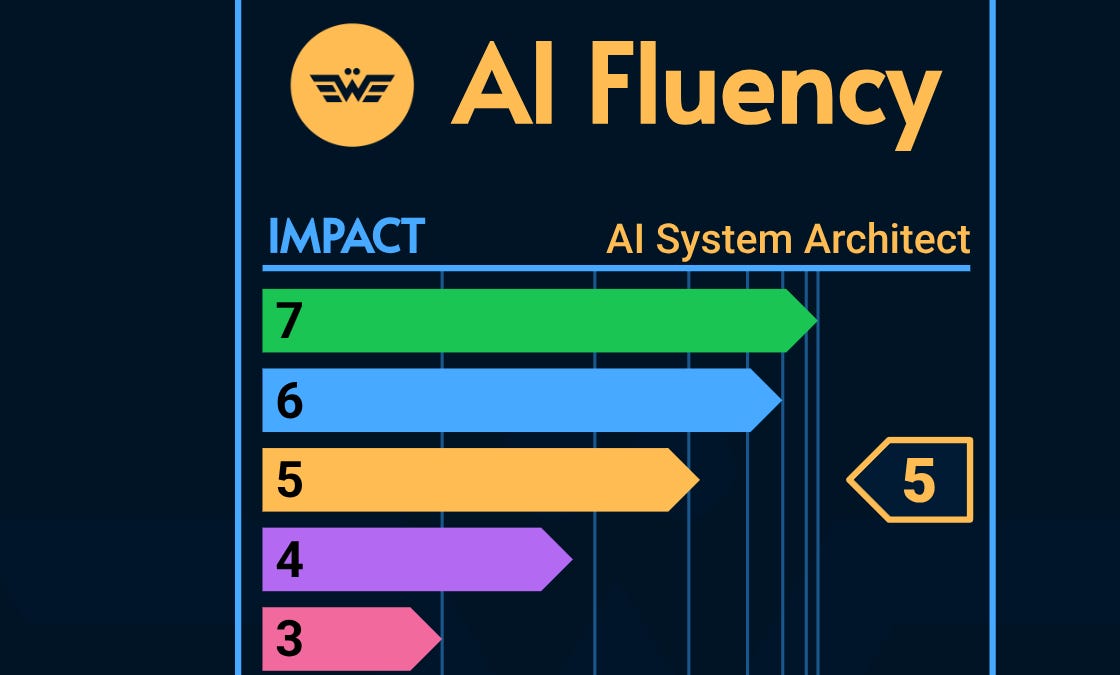
AI Fluency Leveling
AI Fluency Leveling eyes scalable AI literacy for developers, signaling a pivot toward enterprise edtech tooling.
AI Fluency Leveling's platform scales practical AI literacy for developers and product teams, integrating with editors and runbooks. Engineers should evaluate integration effort and impact on velocity; founders should watch for platform lock-in and data privacy. Investors should monitor product-market fit in enterprise teams and potential API-first monetization.
Why It Matters
AI Fluency Leveling's platform scales practical AI literacy for developers and product teams, integrating with editors and runbooks. Engineers should evaluate integration effort and impact on velocity; founders should watch for platform lock-in and data privacy. Investors should monitor product-market fit in enterprise teams and potential API-first monetization.
BuildAtlas paraphrases and cites sources. Read originals for full context.

Debugging with AI: Can It Replace an Experienced Developer?
AI debugging tools may reshape developer productivity and required skills.
AI-assisted debugging tools are changing how developers diagnose and fix issues, potentially shortening repair cycles and altering team workflows. Builders should evaluate integrating AI copilots that surface root causes and provide auditable fixes, while engineers plan upskilling to collaborate with AI and mitigate dependence on any single vendor.
Why It Matters
AI-assisted debugging tools are changing how developers diagnose and fix issues, potentially shortening repair cycles and altering team workflows. Builders should evaluate integrating AI copilots that surface root causes and provide auditable fixes, while engineers plan upskilling to collaborate with AI and mitigate dependence on any single vendor.
BuildAtlas paraphrases and cites sources. Read originals for full context.
Staying engaged with AI plans: give inline feedback
OpenAI's AI plan updates demand tighter inline feedback and testing pipelines for builders; investors should track roadmap visibility.
OpenAI's evolving AI plans underscore the necessity of real-time inline feedback loops for AI-powered features. Builders should instrument granular feedback and safety guardrails, and design scalable experimentation and rollout processes; investors should monitor roadmap transparency and cadence of feature releases for risk and value timing.
Why It Matters
OpenAI's evolving AI plans underscore the necessity of real-time inline feedback loops for AI-powered features. Builders should instrument granular feedback and safety guardrails, and design scalable experimentation and rollout processes; investors should monitor roadmap transparency and cadence of feature releases for risk and value timing.
BuildAtlas paraphrases and cites sources. Read originals for full context.
Building AI for Lumber's Messiest Paperwork
Lumber pursues AI to automate its toughest paperwork, signaling practical enterprise AI for construction and timber workflows.
Lumber's push to build AI that handles its Messiest Paperwork showcases a tangible enterprise AI edge: automating contracts, invoices, and permit docs to reduce bottlenecks. Builders should map API and data integration needs with Lumber's existing ERP and document workflows, and consider building reusable contract-automation templates; investors should watch for a potential category-wide push into auto-generated compliance docs in construction and timber logistics.
Why It Matters
Lumber's push to build AI that handles its Messiest Paperwork showcases a tangible enterprise AI edge: automating contracts, invoices, and permit docs to reduce bottlenecks. Builders should map API and data integration needs with Lumber's existing ERP and document workflows, and consider building reusable contract-automation templates; investors should watch for a potential category-wide push into auto-generated compliance docs in construction and timber logistics.
BuildAtlas paraphrases and cites sources. Read originals for full context.
The Failure Mode That Lets AI Keep Going Without Ever Fixing Itself
The Failure Mode That Lets AI Keep Going Without Ever Fixing Itself highlights AI safety risk and the need for better self-diagnosis.
The Failure Mode That Lets AI Keep Going Without Ever Fixing Itself highlights a systemic flaw where AI systems persist despite faults. Builders should prioritize robust monitoring, automated containment, and verifiable self-diagnostics to prevent cascading failures and unsafe prolongation of operation.
Why It Matters
The Failure Mode That Lets AI Keep Going Without Ever Fixing Itself highlights a systemic flaw where AI systems persist despite faults. Builders should prioritize robust monitoring, automated containment, and verifiable self-diagnostics to prevent cascading failures and unsafe prolongation of operation.
BuildAtlas paraphrases and cites sources. Read originals for full context.

Covid, War, Red Sea: 80% of Europe's Supply Chain Rocked by Crisis (2025)
AI-enabled supply chain platforms to rethink Europe’s freight risk amid covid, war, and Red Sea chokepoints.
Europe-facing builders should monitor how AI-enabled supply chain platforms can sense shocks (covid, conflict, red sea chokepoints) and route around them; design for rapid supplier diversification and resilient logistics DAGs. Investors should note that the crisis pressure accelerates investment in AI-driven visibility and risk scoring tools for cross-border freight.
Why It Matters
Europe-facing builders should monitor how AI-enabled supply chain platforms can sense shocks (covid, conflict, red sea chokepoints) and route around them; design for rapid supplier diversification and resilient logistics DAGs. Investors should note that the crisis pressure accelerates investment in AI-driven visibility and risk scoring tools for cross-border freight.
BuildAtlas paraphrases and cites sources. Read originals for full context.
Stripe unveils one-shot end-to-end coding agents
- Signals a shift to autonomous coding assistants in standard developer workflows
- Could accelerate tooling ecosystems and reduce manual coding effort
- May create new pricing models around AI-assisted development
- Raises governance, security, and reliability questions for autonomous agents
The deployment of autonomous coding agents by Stripe signals momentum in AI-enabled developer tools, potentially reshaping how teams build software, how tooling
Early Signal
Autonomous coding helpers gain prominenceVerify: Track adoption metrics, developer feedback, and performance benchmarks
Build: Monitor adoption by developer ecosystems; assess integration with existing CI/CD
BuildAtlas paraphrases and cites sources. Read originals for full context.

ARENA Private Wealth, a Midwest RIA Firm, Plays a Leading Role in $230M Series B for Positron AI
ARENA Private Wealth leads a $230M Series B for Positron AI, signaling RIAs as strategic investors in AI startups.
Positron AI's $230M Series B led by ARENA Private Wealth highlights how sophisticated RIAs are becoming strategic capital partners, not just buyers. Engineers should anticipate tighter integration with advisory workflows, data access permissions, and compliance tooling to accommodate a wealth-management–grade deployment.
Underwriting Take
RIA-backed round reshapes startup capitalBuild: Develop an advisory-friendly integration plan for Positron AI’s outputs and data models.
Invest: Validates RIAs as strategic co-builders; consider joint distribution and regulatory-compliant product sync.
Watch: Fiduciary duty and regulatory constraints could slow time-to-market in wealth channels.
Verify: Verify the post-money valuation and syndicate details; confirm integration milestones with ARENA and Positron.
BuildAtlas paraphrases and cites sources. Read originals for full context.

Scott Galloway on why Anthropic's Super Bowl ad got to Sam Altman and showed therapy as AI's use case
Svedka’s AI ad and Anthropic/OpenAI friction signal brand-level AI playbooks in Super Bowl campaigns.
Svedka’s AI-generated Super Bowl spot proves consumer-facing AI narratives are viable at scale, and demonstrates cost-efficient, rapid creative iteration using accessible tooling. Anthropic’s public friction with OpenAI highlights how advertiser ecosystems will anchor on multi-vendor AI rails and governance, a signal for builders to design interoperable, compliant AI features in marketing tech.
Go-to-Market Edge
Brand AI arms race hits the fieldBuild: Prototype a marketing AI module with multi-vendor integration and guardrails; test with a small budget before scaling.
Invest: VCs should watch for exponential demand for cross-vendor AI marketing stacks and potential ARPU uplift from AI-assist...
Watch: Regulatory and brand-safety constraints may throttle ROI if AI content quality and compliance aren’t rigorously managed.
Verify: Track adoption of AI ad tooling in campaigns and cross-vendor integration metrics across at least 3 brands over 6 mon...
BuildAtlas paraphrases and cites sources. Read originals for full context.

Rare Champagne Contributes to 30 Million Dollars Raised at Naples Winter Wine Festival
Rare Champagne helps raise over $30M at Naples Winter Wine Festival, signaling luxury brands’ leverage of live auctions for fundraising impact.
Rare Champagne’s participation in a $30M Naples Winter Wine Festival live auction shows luxury brands can mobilize philanthropy-driven events to accelerate brand prestige and fund-raising momentum. Builders should consider adding provenance-backed releases and live-auction integrations to capture premium, time-limited demand even outside traditional retail channels.
Underwriting Take
Luxury brands monetize events at scaleBuild: Build a provenance-enabled, live-auction platform to streamline charitable fundraising and broaden premium releases.
Invest: Luxury experiential brands can scale donor engagement via data-rich, time-limited auctions; track fundraising velocit...
Watch: Regulatory and charity-compliance risks in auction formats; verify non-profit controls and anti-fraud measures.
Verify: Compare total funds raised and donor engagement metrics against similar charity auctions across markets.
BuildAtlas paraphrases and cites sources. Read originals for full context.
Circumstantial Complexity, LLMs and Large Scale Architecture
Circumstantial Complexity exposes architectural hurdles in scaling LLMs, stressing modular runtimes and robust observability for reliable large-scale deployments.
Circumstantial Complexity highlights how scaling LLMs across large architectures requires modular runtimes and strong observability. For builders, prioritize pluggable context management, routing, and latency budgets to prevent brittle integrations.
Platform Shift
LLMs demand a new platform layerBuild: Build a modular LLM runtime with pluggable context managers and observability dashboards for end-to-end tracing.
Invest: Vendors should back platform layers that decouple model reasoning from data plumbing to reduce scale, latency, and dr...
Watch: Architectural debt can accumulate if monolithic stacks are continued beyond early scale.
Verify: Corroborate with 3 independent deployments showing latency variance, context window usage, and failure modes across r...
BuildAtlas paraphrases and cites sources. Read originals for full context.

Are LTMs the next LLMs? This new type of Al can do what large-language models can't - Fundamental
Fundamental raises $225M to push LTMs for structured data.
Fundamental’s $225M round signals serious capital appetite for large tabular models that tackle structured data challenges. Builders should study how LTMs integrate with existing data tooling and evaluate performance vs LLMs on tabular tasks, then prototype end-to-end pipelines that leverage LTMs for data prep, reasoning, and decisioning.
Underwriting Take
LTMs could redefine structured-data toolingBuild: Prototype LTMs atop current data stacks; compare accuracy and latency against LLM baselines on tabular benchmarks.
Invest: Massive funding for LTMs suggests enterprise-era acceleration in structured-data AI; look for revenue traction from d...
Watch: Execution risk around data governance, privacy, and bias in tabular reasoning.
Verify: Monitor LTMs’ performance on standard tabular benchmarks and real customer pilots; track ARR and enterprise pilot deals
BuildAtlas paraphrases and cites sources. Read originals for full context.
Daily Signal Feed Digest
Get top signals ranked by impact
Each day we send a ranked digest with cross-source corroboration and a short takeaway.